Leave Your Message
-
Phone
-
E-mail
-
Whatsapp
China has become a major sourcing base for Shower Accessories, from handheld showerheads and slide bars to hoses, brackets, and shelves. Grand View Research estimated the global bathroom accessories market at about US$20.6 billion in 2023. Such figures offer context, not a guarantee of demand: reports may classify products differently, and published estimates can vary. Buyers should compare suppliers by product category, production capacity, and documented quality controls—not factory photos alone.
Performance details matter. The U.S. Environmental Protection Agency’s WaterSense specification sets a maximum flow rate of 2.0 gallons per minute for labeled showerheads, compared with the federal standard of 2.5 gallons per minute. This benchmark applies to the U.S. program, not every destination market. Ask manufacturers for flow-test records, material specifications, finish and corrosion testing, and the certificates required in your sales region. Check whether documents match the exact model being quoted. Small differences matter.
This guide reviews manufacturers in China through practical sourcing questions: What products do they make in-house? Can they keep finish and fit consistent across repeat orders? Do they provide samples, inspection records, and clear warranty terms? Trade listings can help build a shortlist, but they do not prove manufacturing capability. A polished sample is not the whole story. Independent checks still matter, and no ranking can replace them. The aim is a useful starting point, with room for buyers to verify claims before committing.
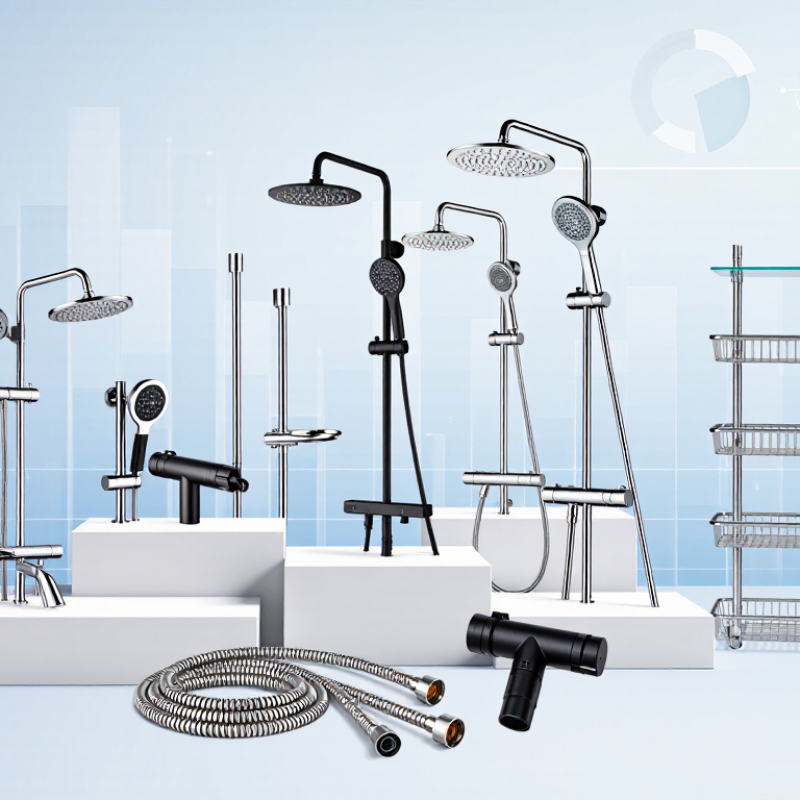
Shower accessories include showerheads, hoses, slide bars, shelves, soap dishes, grab bars, and hooks. Each serves a practical purpose. A handheld showerhead helps rinse children, pets, or hard-to-reach areas. A slide bar lets users adjust its height. Shelves keep shampoo within reach, while hooks hold towels away from wet surfaces. Small parts matter.
Choose accessories around the shower’s size and daily use. A compact corner shelf can free up space in a narrow enclosure. A longer hose may make cleaning easier, but it should not kink or drag across sharp edges. Grab bars need secure fixing to suitable wall supports; suction-mounted holders are not a substitute for properly installed support. Check the fitting instructions and wall material before drilling. A tidy-looking layout can still feel awkward if controls or storage sit beyond easy reach. I have seen that detail overlooked.
Tips: Keep frequently used items near the shower entrance, and leave space for water to drain from shelves. Wipe metal fittings dry after use to reduce water spots. If an accessory rattles or shifts, check its mounting rather than simply tightening it harder.
| Accessory | What It Includes | How It Is Used | Common Materials | Selection and Installation Notes |
|---|---|---|---|---|
| Showerhead | Fixed wall-mounted or ceiling-mounted spray head; some models offer adjustable spray patterns. | Distributes water for rinsing and bathing. | Stainless steel, brass, ABS plastic, and silicone spray nozzles. | Check the connection size, water pressure requirements, spray coverage, and local water-efficiency rules. |
| Handheld shower and hose | A detachable hand shower connected to a flexible hose, often supplied with a wall bracket or slide bar. | Allows targeted rinsing and can make cleaning the shower enclosure easier. | ABS plastic or metal for the hand shower; stainless steel or polymer for the hose. | Confirm that the hose reaches the intended use area and that the fittings match the shower outlet. |
| Shower arm and flange | A pipe arm that connects a wall-mounted showerhead to the water outlet, plus a decorative wall flange. | Positions the showerhead and covers the opening around the wall connection. | Brass, stainless steel, or plated metal. | Arm length, bend, thread type, and wall clearance should suit the showerhead and existing plumbing. |
| Slide bar and shower holder | A vertical rail with an adjustable holder for a handheld shower; some sets include a hose and soap dish. | Lets users adjust the hand shower height and angle. | Stainless steel, aluminum, brass, and ABS plastic. | Secure the bar to suitable wall structure or use a mounting method approved for the wall surface. |
| Shower shelf or basket | A wall-mounted or corner storage unit, available with open shelves, rails, or drainage slots. | Stores shampoo, soap, and other bathing products within reach. | Stainless steel, aluminum, brass, glass, and ABS plastic. | Choose a corrosion-resistant finish and a mounting position that does not obstruct the shower controls. |
| Grab bar | A fixed support rail mounted to a shower wall. | Provides a handhold for balance and support when entering, exiting, or using the shower. | Stainless steel or other materials specifically rated for grab-bar use. | Install according to applicable accessibility guidance and the product instructions; anchor to suitable structural backing. |
| Shower curtain rod | A straight, curved, or tension-mounted rod with brackets or end supports. | Supports a shower curtain to help limit water splash outside the bathing area. | Stainless steel, aluminum, and coated steel. | Measure the opening and select a rod and fixing method suited to the wall type and span. |
| Shower curtain hooks or rings | Small hooks or rings that connect curtain eyelets to the curtain rod. | Allow the curtain to slide along the rod for opening and closing. | Plastic, stainless steel, or plated metal. | Check that the ring opening fits the rod and curtain eyelets; choose materials appropriate for a humid environment. |
| Shower drain cover or grate | A removable visible cover fitted over a compatible shower drain body. | Allows water to flow into the drain while helping keep larger debris out of the waste line. | Stainless steel, brass, or polymer. | Match the cover to the drain type and dimensions; the cover alone does not replace the drain body or waterproofing. |
| Replacement seals and washers | Rubber or silicone washers, O-rings, and seals supplied individually or in repair kits. | Help form watertight connections in shower hoses, showerheads, and related fittings. | EPDM rubber, silicone, or other specified elastomers. | Use the correct size and material for the fitting; inspect seals periodically if leaks develop. |